
Idaho goes to DC to talk salmon
Idaho Outfitters and Guides Take Salmon and Steelhead Advocacy to Washington, D.C.
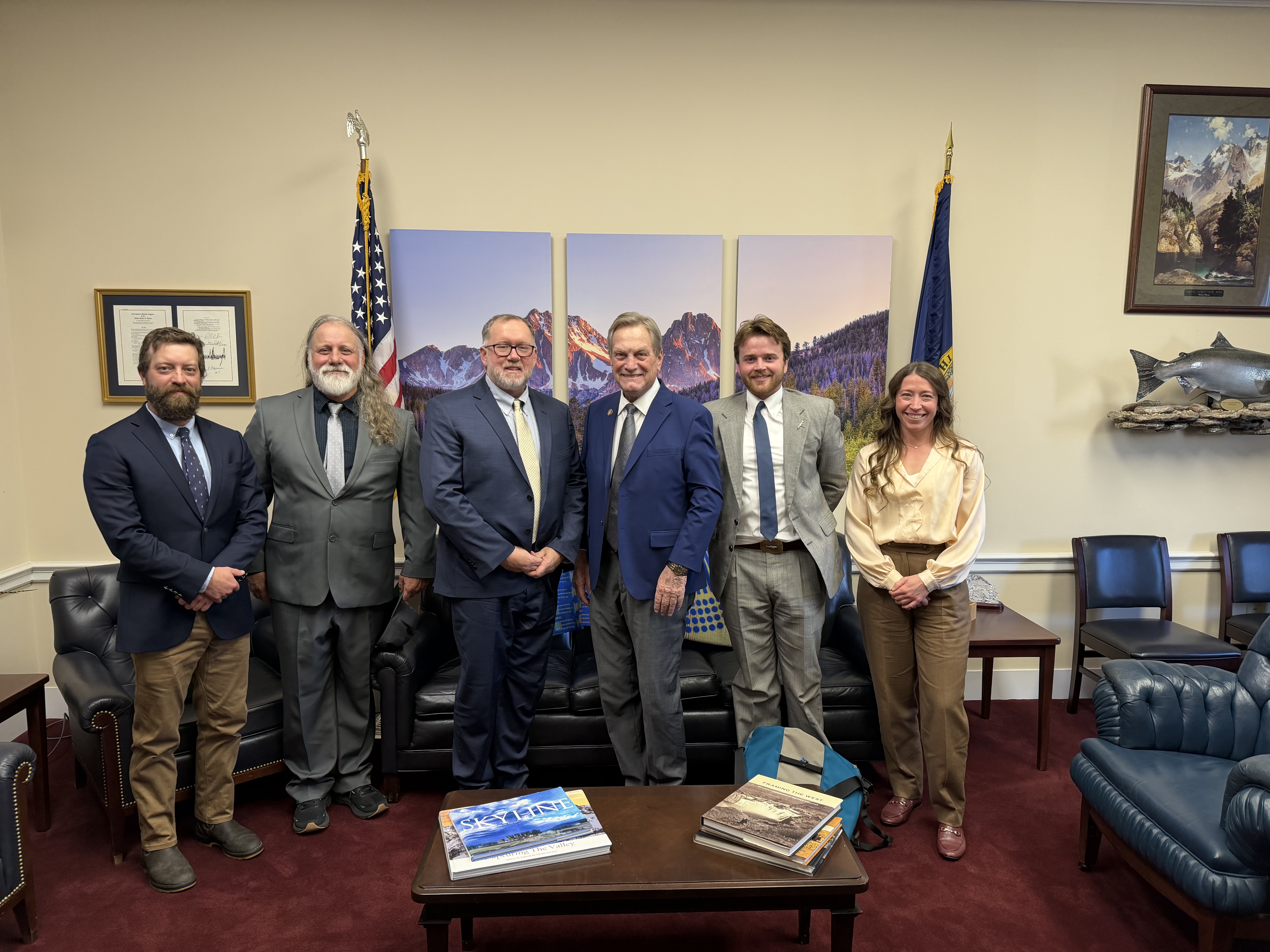 From left to right: Mark Martin, Roy Akins, Dustin Aherin, Congressman Mike Simpson, Jack Hurty, and Lauren McCullough
Last week, I had the honor of leading a group of Idaho outfitters and guides to Washington, D.C. to advocate for salmon and steelhead recovery and the rural businesses and communities that depend on healthy, fishable rivers. We arrived on Monday, January 12, and spent three full days meeting with members of Congress and their staff.
We met in person with Idaho’s entire congressional delegation: Senator Crapo, Senator Risch, Congressman Simpson, and Congressman Fulcher. Congressman Simpson stood out as the strongest advocate in the room. He spoke clearly and forcefully about the science behind salmon and steelhead recovery and demonstrated a strong understanding of both the biological realities and the policy challenges.
With the rest of the delegation, we had productive and honest conversations. We made our long-term position clear: the removal and replacement of the Lower Snake River dams remains essential for meaningful recovery. At the same time, we acknowledged political realities and focused on short-term actions Congress and the administration can take now to improve survival over the coming decades.
We also met with Senator Martin Heinrich of New Mexico and Congresswoman Marie Glusenkamp Perez of southwest Washington. In those meetings, we spent time educating lawmakers about Idaho’s outfitting and guiding industry, the economic importance of salmon and steelhead, and the foundational role these fish play in sustaining rural communities.
In addition to member meetings, we met with staff from the offices of Congressman Bentz, Congressman Zinke, Senator Daines, and Senator Lee. These conversations were about building long-term relationships, sharing on-the-ground perspectives, and creating lines of communication that will matter as future policy decisions are made.
One of the most impactful points we raised across meetings was the dire condition of Middle Fork Chinook salmon. This year, no redds were observed in the mainstem Middle Fork of the Salmon River. That fact alone tells the story better than any chart or report. It is a clear indicator of how far these populations have fallen, and it resonated strongly—even with lawmakers who disagreed with us on other parts of the issue.
We also made a point in every meeting to express our strong support for public lands and keeping them in public hands. Outfitters and guides depend on access to well-managed public landscapes, and we raised concerns about the current nominee for Bureau of Land Management Director and what that leadership choice could mean for conservation, access, and responsible stewardship.
Outside of the meeting rooms, we were something of a novelty. Many people in D.C. have never been to Idaho and have never met a professional outfitter or guide. That curiosity worked in our favor. It gave us an opportunity to humanize these issues and show what life and work look like in the communities most affected by salmon declines and public land policy.
Overall, the trip was productive. We strengthened relationships, expanded our network, and made sure the voices of Idaho’s guiding and outfitting community were heard. This was not a one-off visit. It was part of a longer effort to keep pressure on decision-makers and continue building momentum for real, science-based solutions.
We’re already looking ahead to the next trip—and the next round of conversations.