
New Travel Management Rule - Simplified
Understanding the Proposed Changes to the Forest Service Travel Management Rule
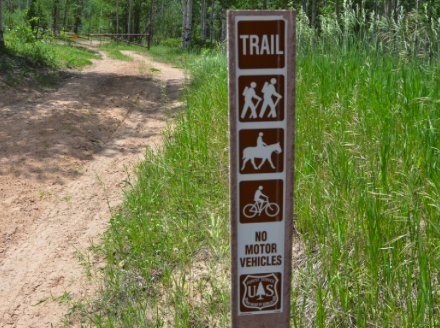
On August 24, 2026, the U.S. Forest Service published a Notice of Intent in the Federal Register announcing that it will begin an environmental impact statement (EIS) process and rulemaking to substantially revise 36 CFR Part 212 — the Travel Management Rule that governs motor vehicle access on National Forest System lands. This is the framework behind every motor vehicle use map (MVUM) on USFS land, and it directly shapes how our outfitters and their clients get into, and out of, the backcountry. This is the system which allows the USFS to designate some trails non-motorized and others motorized or to dictate the specific width of allowed vehicles on certain roads. It is the tool used to close some roads and trails to future maintenance or ultimately to open new ones. This is a big deal. IOGA has been reviewing the proposal closely, and we want members to understand what is actually on the table as we send out a short survey asking how these changes could affect your operations, for better or worse. One of the main things the USFS is looking for is specific on-the-ground feedback, and we intend to provide some based on your responses to our SURVEY we need you to fill out.
Why This Is Happening
On May 29, 2026, the President signed Executive Order 14408, which rescinded the two 1970s executive orders (11644 and 11989) that the current Travel Management Rule was written to implement, and directed agencies to revise their regulations accordingly. USDA is using this as the occasion to rewrite the rule with a stated goal of increasing public access and reducing regulatory burden. Public comments on the scope of the EIS are due September 23, 2026. USDA expects to publish the actual proposed rule and draft EIS in spring 2027, with a final rule and record of decision in early 2028. So this is a multi-year process that is just beginning.
The Core Proposed Changes
Based on our read of the Federal Register notice, here are the big picture items the Forest Service is putting on the table:
-
A new “open unless closed” presumption: existing roads, trails, airfields, trailheads, and other access points would be presumed open to appropriate public use unless closure is required by law, valid existing rights, or is backed by specific, documented reasons tied to resource conditions, public safety, use conflicts, or maintenance and administrative capacity. Currently, trails etc. are presumed closed unless on the map stating they are open.
-
Removal of the national “minimization criteria”: the current rule directs officials to design travel systems that minimize damage to soil, watershed, and wildlife habitat, and minimize conflicts among different uses. The proposal would eliminate this national minimization mandate and replace it with an “access-oriented framework”. At the specific project/NEPA level, a criteria to, “avoid or minimize adverse effects” will still exist but not at the larger system design level and accounting for user conflict as a reason to limit access to specific groups will be more challenging to justify.
-
A mandatory annual review of closed or highly restricted routes: each unit, subject to available appropriations, would have to review its closed and restricted roads, trails, and access points every year and flag which ones may warrant reconsideration. Currently no proposal to fund or staff this newly required work.
-
A requirement to consider new access: units would have to consider adding new roads, trails, and access points where appropriate to increase access, though this alone would not authorize construction or commit funding. Again, this is subject to available appropriations.
-
New treatment of Class 1 e-bikes: Class 1 e-bikes (pedal-assist only, no throttle) would be exempted from motor vehicle designation requirements and could be ridden on any trail where conventional mountain bikes are already allowed, unless a local forest specifically restricts them. We have a number of outfitters interested in this.
-
New pathways for limited off-route motorized use: More proposed freedom to travel off designated roads and trails for the specific purposes of big-game retrieval, firewood collection, and dispersed camping. Also proposing more freedom for designating over-snow recreation areas.
-
A streamlined process for minor and clerical map corrections, separated from the process used for more substantive designation changes. Today, revising a designation of any size — even fixing a mapping error — triggers the full public-involvement, coordination, and designation-criteria process under §§212.52–212.55, "regardless of scale." The proposal would split this into two tracks: true clerical corrections (fixing errors that don't change what's actually open or closed) would get a lighter process, while anything that actually changes access would still go through some version of the designation process, tiered by scale. The notice doesn't define where "minor" ends and "substantial" begins so we have some concerns here as a generous reading of "minor" could let real access changes move through a lighter process with less/no public input.
Where We See Opportunity
A number of our outfitters have, over the years, had trails and access roads, their business depended on get decommissioned with little practical way to revisit that decision once it was made. The proposal’s mandatory annual review, combined with the new “open unless closed” presumption, would for the first time require the Forest Service to affirmatively look at those closures every year and identify candidates for reconsideration. Reopening a route would still have to run through a review process and satisfy documented resource and safety criteria, so this is not automatic, but it is the first structural opening in two decades for permit holders to get a formal second look at a route or access point that was closed out from under them.
We have also heard directly from a number of members who are interested in what a Class 1 e-bike exemption could mean for their operations. These tools open longer mountain bike trips to a broader network of potential clients. This market will have significant opportunities.
Where We Have Concerns
Our biggest question mark is what more (and faster) motorized and e-bike traffic could mean for game. The research on this is fairly consistent. Forest Service biologist Lyon's 1983 road-density model which is still widely used in elk habitat analysis today, shows habitat effectiveness falling to roughly half of undisturbed levels once open road density reaches about 2 miles of road per square mile, and continuing to drop, to as little as 10 percent of undisturbed levels, as densities climb toward 5 to 6 miles per square mile. A 2009 study by USGS researchers Naylor, Wisdom, and Anthony, comparing elk response to ATVs, mountain biking, hiking, and horseback riding, found elk travel time increased most with ATV exposure, more than any of the non-motorized activities studied. And according to the Forest Service's own Fire Effects Information System, a 1991 Idaho Department of Fish and Game study (Unsworth and Kuck referenced here) found bull elk survival in roaded habitat in north-central Idaho was roughly half that of unroaded habitat (41 percent versus 78 percent)..
That research generally treats motorized use as the disturbance driver, which is why we have some concerns around defaulting towards open motorized travel without the same required considerations for wildlife impacts.
What Won’t Change Right Now
It is worth being clear about what this notice does and does not do. This is a Notice of Intent to prepare an EIS and begin rulemaking. It is not a final rule, and nothing about your permit, your existing routes, camps, or motor vehicle use maps changes today. The Federal Register notice states explicitly that the new presumption “would not itself change the legal status of any road, trail, airfield, trailhead, area, or other access route or point,” and that “existing motor vehicle use designations and maps would remain in effect until revised under the amended regulations.” In practice, that means every MVUM and OSVUM in use on Idaho’s national forests today stays exactly as it is, unless and until a future rule is finalized, which will not happen before 2028 and then and each unit works through its own local review process after that. In some forests travel management plans have not been reviewed in a long-time and we should have no expectation they would be in the near term even if this rule goes into effect.
FILL OUT THE SURVEY — We Need Your Input
IOGA needs your feedback to help shape our comments. Your answers will directly shape the comments we submit on your behalf. PLEASE FILL OUT THE SURVEY HERE
If you would like to comment directly to USDA in the meantime, comments on this Notice of Intent are due September 23, 2026, and can be submitted through regulations.gov under docket number FS-2026-0100.
Questions about any of this? Reach out to the IOGA office — we are happy to walk through the proposal in more detail before the survey goes out.