
PILT & SRS – What They Are, Why They Matter, and What’s at Stake for Rural Idaho
Idaho is a public-lands state. Our famed landscapes – the Sawtooths, the Owyhees, the Selkirks – are the foundation of our quality of life, economy, and culture. Places like the Frank Church and the Middle Fork of the Salmon represent the pinnacle of the Wilderness and Wild and Scenic Rivers systems. However, while these places are worth protecting and fighting for, that doesn't mean they are without their challenges. One such challenges is the effect that large swaths of public lands have on the budgets of local governments and counties. Because it’s owned by the American people and managed by the federal government, national public lands – like National Forests, Wilderness, or BLM land – are not subject to property tax. This means that for many counties in the West, the majority of the land inside the county line isn’t taxable. At the same time, public lands attract visitors and tourists, who utilize county roads and services. That reality shapes county budgets in a way most Americans never think about. Roads still need to be plowed, deputies still need to cover huge patrol areas, and schools still need to keep the lights on. But when the property tax base is limited, the math gets tight fast.
Two federal programs exist to fill part of that gap: Payment in Lieu of Taxes (PILT) and the Secure Rural Schools (SRS) program. They’re often mentioned in the same breath, but they’re very different tools—and understanding those differences matters if we care about strong rural communities and solid relationships with the agencies that manage public lands. Building sustainable funding structures for high public land counties is key to building grassroots support for our public lands and to making public lands work for all.
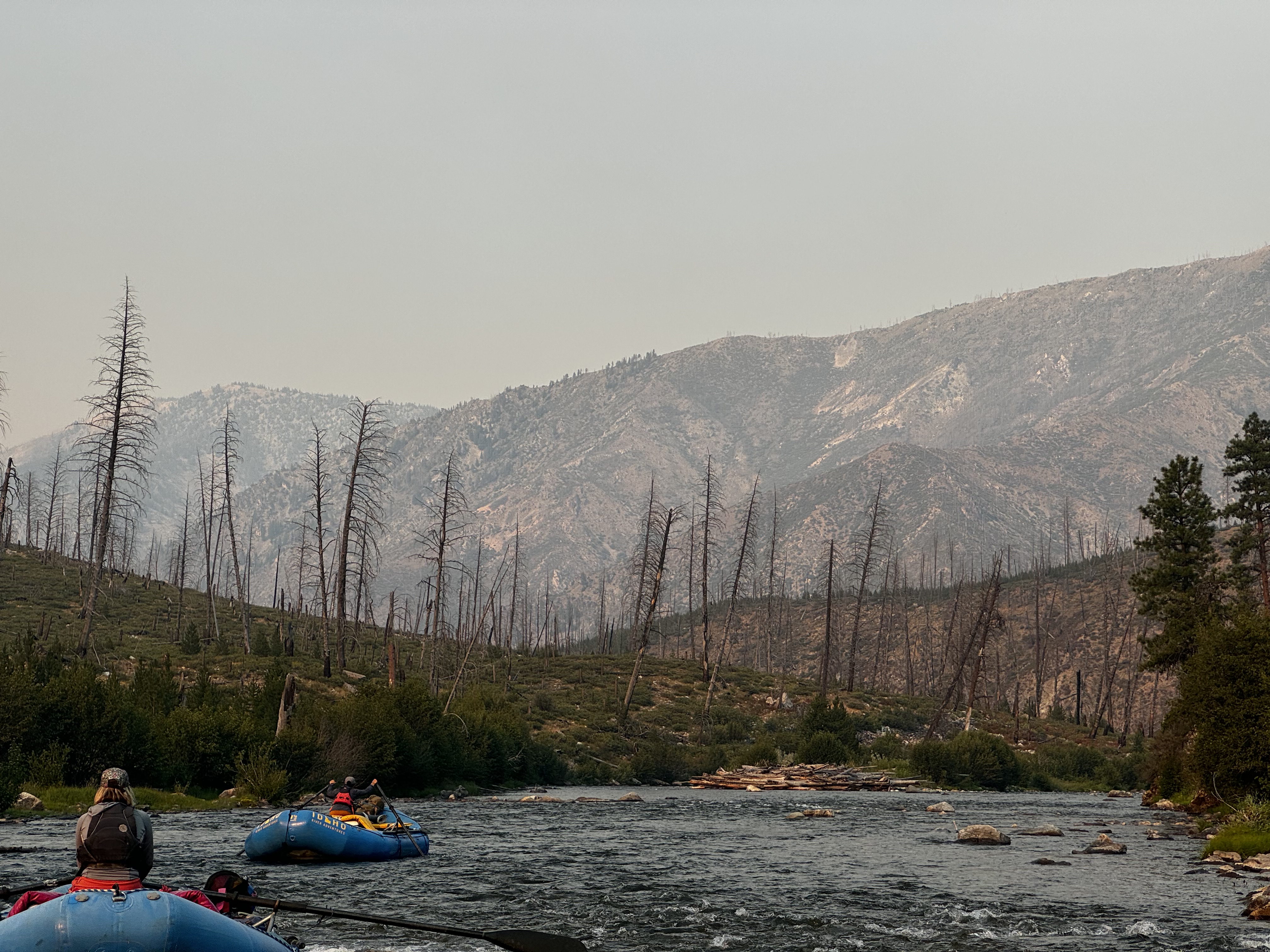 A smokey August deadhead on the Middle Fork represents both the beauty and challenges of public land management in Idaho
What PILT Is — and What It Isn’t
PILT stands for Payment In Lieu of Taxes, and it’s exactly what it sounds like. Counties can’t tax federal land, so the federal government cuts a check each year to help offset that loss.
PILT funding is calculated through a formula that primarily includes the number of acres of federal public land and population in the county. Counties can use PILT for just about anything property taxes normally cover: sheriff’s departments, search and rescue, EMS, road crews, county jails, public health, and general operations.
It’s not perfect, and it isn’t guaranteed forever—Congress has to keep authorizing it and appropriating money for it—but compared to SRS, PILT is the “reliable” one.
The key distinction: PILT is not tied to resource extraction. It doesn’t matter whether the county’s BLM and Forest Service lands produce timber, minerals, or anything else. PILT is a baseline acknowledgement that federal ownership comes with costs, and counties shouldn’t eat those costs alone.
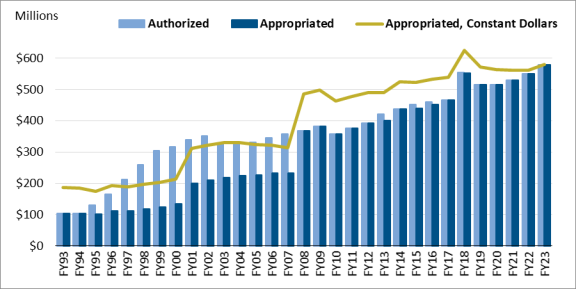
PILT Authorizations and Appropriations, inflation adjusted
Why SRS Exists — and Why It’s a Rollercoaster
SRS was never meant to be permanent. Congress created it in 2000 when timber harvests declined, stranding many rural budgets. Rural school districts and road departments had relied for decades on the 25% Fund, a payment program from federal agencies to county governments that redistributed 24% of the revenues from timber sales. The last few decades have seen a decline in timber harvests on public lands, largely for economic and regulatory reasons. When the sawmills slowed down, communities were left holding the bag — SRS was the patch. Distributions are calculated largely on historic timber revenues from federal public lands, so some counties in Idaho with no history of logging do not receive SRS funds.
SRS was intended to stabilize funding primarily for schools and county roads, especially in historically timber-dependent places like Idaho, Oregon, Washington, and Montana. The problem is that SRS is itself unstable and vulnerable to politics. It expires. Congress fights over whether to renew it. Payments drop off a cliff when authorization lapses, and counties get left in limbo—sometimes forced to write budgets not knowing if the money will show up.
In short: PILT is the base layer. SRS is the swing factor that can make or break rural school and road budgets in a given year.
Why This Hits Idaho Hard
Because Idaho has some of the highest percentages of federal land in the country, the stakes are higher here than almost anywhere else.
-
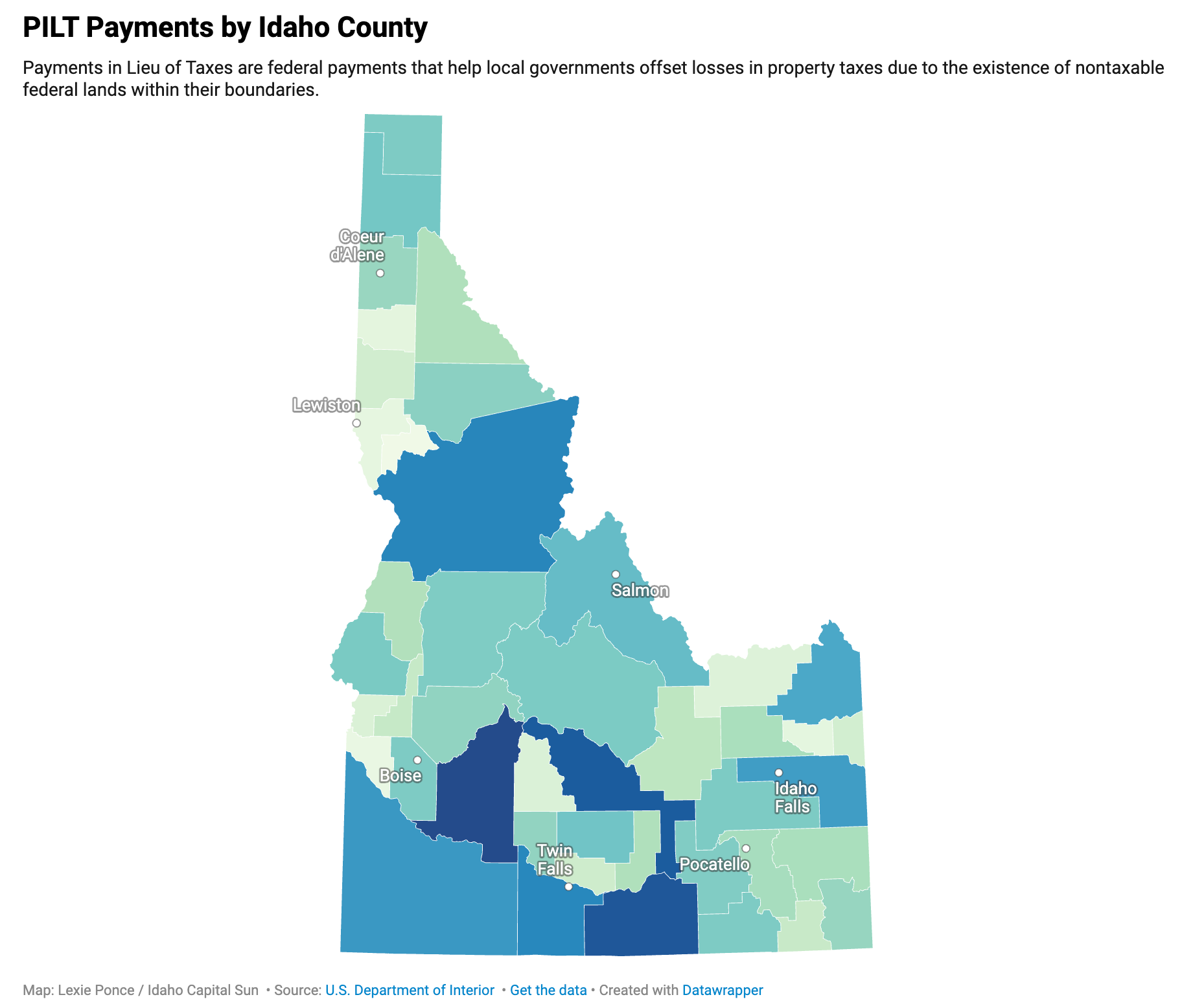
Many Idaho counties are made up of over 50% federally managed public lands, leaving a small base of taxable land remaining for the county.
-
PILT payments have not kept up with the maintenance and emergency response demand in many places, as the post-Covid tourism boom and the rapid growth of the outdoor recreation economy has strained services.
-
SRS has been subject to political games, and at the time of this writing, the program has no funding. When that happens, schools and road departments take the hit first, with layoffs and deferred maintenance close behind.
Without these programs, the budgets can get tricky, leaving commissioners forced to make hard choices: raise property taxes on the small amount of private land that exists, slash services, or chase short-term extraction just to keep the doors open. For outfitters and guides – the majority of whom live and work in rural counties – lack of funding affects the roads they drive on, the emergency response they rely on, and the schools they send their kids to. These programs have real impacts on working people and they shouldn't become a political football.
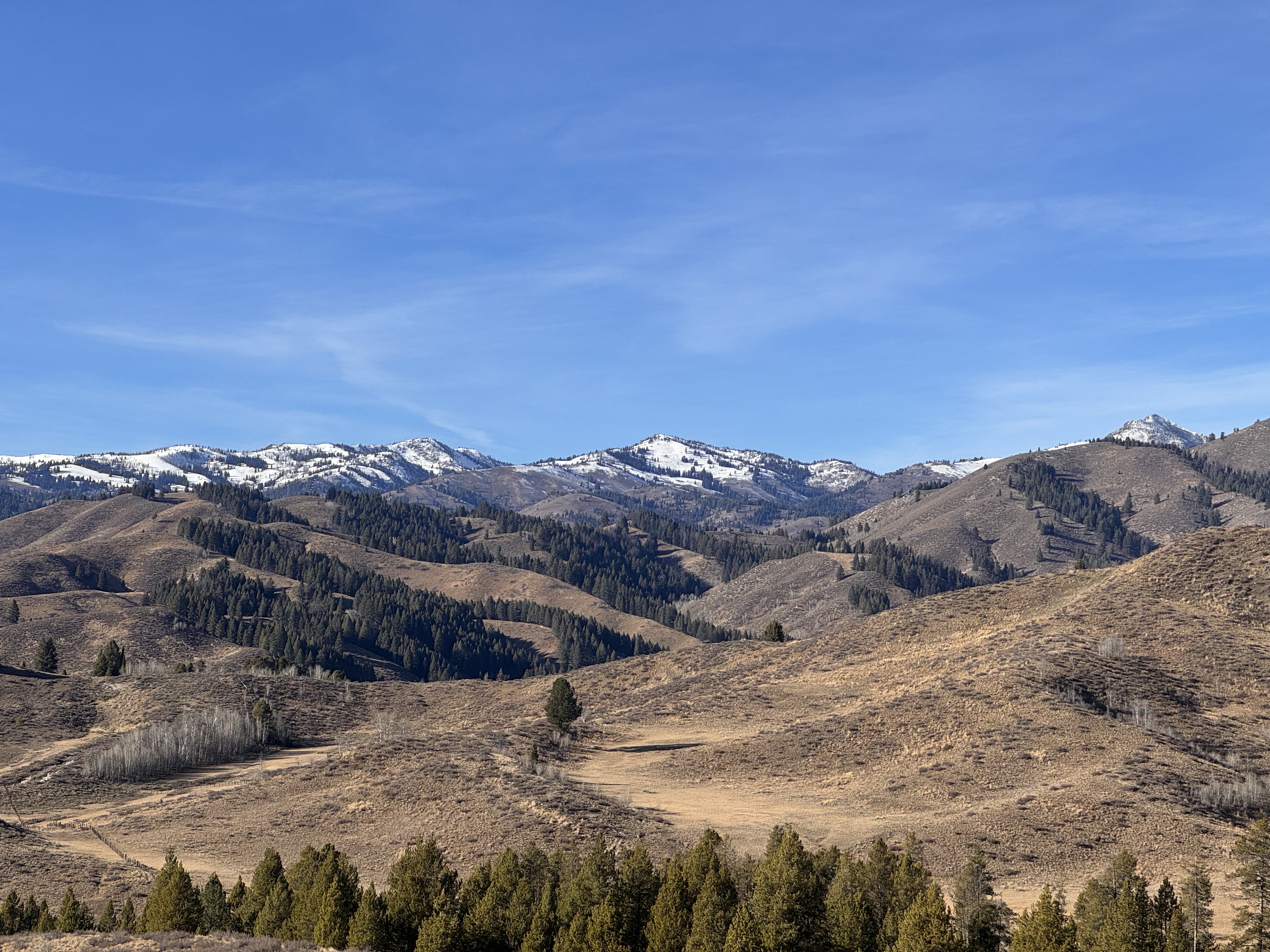
How PILT and SRS Shape the Local View of Public Lands
This part rarely gets said out loud, but it’s true:
In the West, rural county commissioners often have a direct line to Congressional delegations, especially when it comes to public land issues. They represent local concerns and key constituencies that are directly affected by land management decisions, and their views have influence. Public land users need county leaders willing to come to the table in building collaborative, pragmatic solutions around public lands, and stable, predictable federal payments are a key piece of that puzzle. Not only do they improve people's lives on the ground, but they allow local leaders in gateway communities to plan, budget, and collaborate with stakeholders and managers rather than fighting them.
When PILT and SRS are funded, communities are more willing to see federal public lands as an asset—for hunting, fishing, outfitting, tourism, and quality of life. Many counties in Idaho are seeing pressure from increased numbers of recreational visitors, and when funding becomes unstable or disappears, resentment grows. It feeds the talking points of those who say federal land is a burden and should be handed to the state, opened up for aggressive resource extraction, or even sold off to private interests to fund basic services.
At present, many local elected officials in public land counties are struggling to keep the lights on, and at the same time dealing with a post-Covid influx of tourists and visitors that strain existing services. We’ve heard it over and over again from county commissioners and state legislators.
Bottom Line
PILT and SRS don’t make anyone rich. They keep rural counties functional. They’re the difference between a sheriff’s deputy covering a 3-hour response area and two deputies splitting the load; between a school keeping its bus routes or telling parents to drive 40 miles; between a graded road and a washboarded one that breaks axles.
If we want healthy rural communities and a productive relationship between high public land counties, the multiple use mandate, and the federal agencies managing the land, then these programs need to be funded predictably and sustainably.