
What the Forest Service Reorganization Means for Idaho Outfitters and Guides
What the Forest Service Reorganization Means for Idaho Outfitters and Guides
April 2026
The U.S. Forest Service is undergoing its most significant structural overhaul in decades, and if you operate on National Forest lands in Idaho, you have a stake in how this plays out. IOGA has been tracking the reorganization closely and wants to give members a clear-eyed summary of what's changing, what's uncertain, and what it could mean for your operation. To read the press release from the Forest Service, click here.
What's Actually Changing
The Forest Service is realigning its organizational structure around four main changes: moving headquarters to Salt Lake City, transitioning to a state-based leadership model, building a network of Operations Service Centers, and unifying the agency's research program.
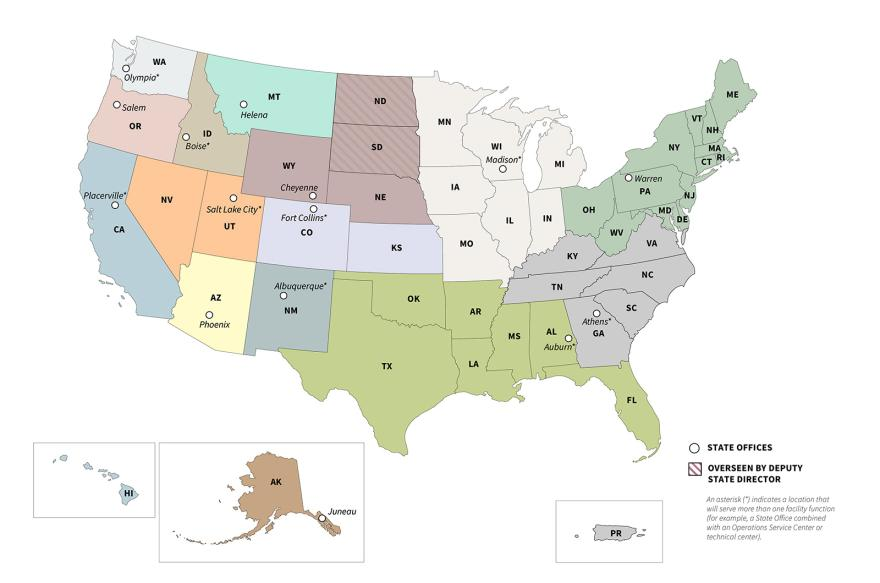
The nine regional offices will all close, with some repurposed to provide high level administrative and technical support . In their place, the agency will transition to a model with 15 state directors — each responsible for one or more states — supported by service centers in Albuquerque, Athens (GA), Fort Collins, Madison, Missoula, and Placerville. The headquarters move to Salt Lake City is expected to be completed by summer 2027.
For Idaho, this means the end of both Region 1 (headquartered in Missoula) and Region 4 (headquartered in Ogden). Our forests will likely fall under the Missoula service center's footprint, though the precise configuration of state director assignments hasn't been finalized.
On the research side, more than 50 research and development facilities in 31 states will close, with the agency concentrating its research operations in Fort Collins, Colorado.
The reorganization also intersects with a broader wildfire restructuring. The administration is moving to consolidate federal wildfire management into a new Wildland Fire Service within the Department of the Interior — a significant shift given that the Forest Service currently manages the bulk of federal wildfire spending. The precise details of that transition remain unsettled.
The Case for the Reorganization
The administration's argument for these changes deserves a fair hearing, as parts of it resonate with frustrations our members have voiced for years.
The Forest Service's regionalized bureaucracy has long been criticized — including by outfitters — for inconsistency and inefficiency. Permit timelines, fee structures, and administrative requirements varied dramatically not just region to region but district to district. A state-based model with clearer lines of accountability could reduce that inconsistency if implemented well. It's worth noting that the Bureau of Land Management is organized in a similar way, with state offices overseeing the districts within a state.
Proponents argue this move will bring leaders closer to the landscapes they manage and the people who depend on them, and will unlock budget and personnel efficiencies. Relocating agency headquarters places the leaders of the Forest Service closer to the land they are tasked with managing, potentially improving bottom-up communication. For outfitters, having a dedicated state director who is accountable specifically to Idaho's National Forests could mean a clearer point of contact and faster responsiveness than navigating a multi-state regional hierarchy ever provided. Idaho in particular could benefit from this transition, as our state has been split into Region 1 and Region 4 historically. This split has lead to misalignment, with different rules and regional management for outfitters operating in Idaho under Idaho state law.
The Reasons for Concern
The risks are real and worth naming directly.
Reorganizations of this scale take years to stabilize, and many of the details of the change are unclear at this time. In the near term, outfitters should expect potential delays in permit renewals and new permit processing as staff sort out new reporting structures and responsibilities. The people who knew your operation and your operating area — many of them may leave during the transition. Institutional knowledge is hard to rebuild, and pulling off complex reorganizations like this is difficult and messy. Consolidating research centers could reduce the ability of the Forest Service to contribute to forestry science, including forest health, grazing, and wildfire. Closing offices and moving staff around will lead to departures from the agency, and when that happens, expertise and knowledge leave as well.
Additionally, moving the Forest Service headquarters to Salt Lake City will isolate agency leadership from decision-makers in Washington DC. This could hinder the ability of agency staff to effectively advise and inform Members of Congress and the Executive Branch, and reduce their voice in the policy-making process. Some staff will remain in DC, but the Chief will be out West.
What This Means Practically for Your Operation
In the short term: communicate early with your district ranger and permit administrator. The forest district level is where your permit actually lives, and those relationships matter more than ever during an uncertain transition period. Don't assume that renewal processes will run on their normal timelines this year or next.
In the medium term: watch how state director assignments shake out for Idaho. The identity and orientation of Idaho's state director will meaningfully shape how the reorganized agency manages the working landscapes at the core of our industry. There will also be a period of transition as forests in North Idaho, formerly Region 1, align with forests in Central and Southern Idaho, formerly Region 4.
It's important to note that this change will likely not lead to a substantial increase in logging or timber sales from the Forest Service. Executing those projects takes staff capacity and expertise, as well as funding and infrastructure that doesn't currently exist. Additionally, public timber harvests are only profitable under limited circumstances, and many of Idaho's forests lack access to mills or commercially viable lumber. There's a reason that 90% of American lumber comes from private forests, mostly in the South and back East. Cutting budgets and reorganizing staff doesn't address those underlying dynamics.
Overall, this reorganization will be a massive change for the Forest Service. It's unclear how it will shake out in the long term, or if it will create benefits for outfitters and permit holders. IOGA will continue tracking this reorganization and engaging with Idaho's congressional delegation and agency staff as implementation proceeds. We'll keep members updated as the picture clarifies.
Questions or observations from members? Contact us at [email protected] or [email protected].